Showing posts with label Armie Hammer. Show all posts

Saturday, February 11, 2012

Sheet-y Saturday.

 Where we take a look at posters for upcoming features.

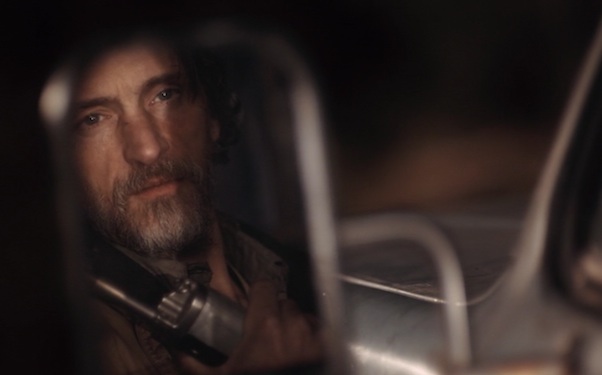
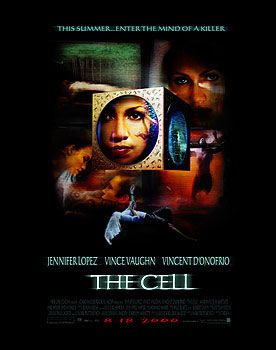
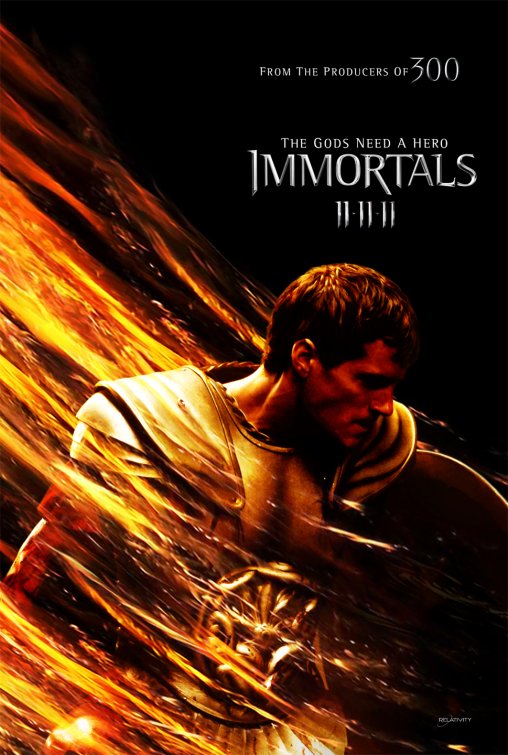
Whoever is behind this one sheet for Mirror Mirror had only purpose in mind: destroy Tarsem movies from having flawless poster designs. Check out the posters released for The Cell, The Fall and Immortals all of which were visually intriguing movies, with imaginative graphic campaigns. What we have here is Photoshop gone seriously wrong and also slightly plagiarist.
For starters, do not showcase your movie's castle when Princess Jasmine isn't anywhere to be found, wait, are you telling me this isn't the castle from Aladdin?
Next, do not have Armie Hammer look like he's still wearing J. Edgar old age makeup...he's supposed to be the prince, not Snow White's creepy stalker. Next, do not make the elves look like a comedy troupe out of a Chelsea Handler fantasy. Last but not least, don't make people believe your heroine has no arms. Unless this is also an adaptation of Wicked, Snow White was never known for her lack of limbs. Seriously, the teasers featuring individual characters were much, much nicer. 

After the overloaded disaster we just saw, this poster is absolutely breathtaking. I don't even know what the movie's about, but the way in which they captured the imminent disappearance of love (don't you want to just try and contain those falling streams from dissolving the couple?) makes me already ache for how heartbreaking this movie will be.

What's your take on these puppies?

Sunday, January 22, 2012

J. Edgar *½

Director: Clint Eastwood
Cast: Leonardo DiCaprio, Armie Hammer, Naomi Watts
Judi Dench, Josh Lucas, Ed Westwick, Jeffrey Donovan, Denis O'Hare

Somewhere between his cross-dressing and legacy as one of the most controversial figures in 20th century history, J. Edgar hoover might have been a fascinating man; however you can't tell this judging by Clint Eastwood's biopic.
Leonardo DiCaprio plays Hoover as a young idealist man, all the way to the eccentric, paranoid creature he turned into towards the end of his life. The film's framing device is having Hoover dictate his biography to several typists (among them Westwick in full Chuck Bass mode), highlighting his feats and hinting at events in his private life that make us wonder if they are part of said framing device or slips in Eastwood's uneven narrative.
Shot in absolute darkness by Tom Stern, who foregoes the chiaro in chiaroscuro, the film feels like if it wants to hide things from us because it's not even sure how to tell them or if it's even allowed to tell them. We see Hoover as a young man taking charge of the newly created Bureau of Investigation, trying to solve crimes as famous as Charles Lindbergh's (Lucas) baby being kidnapped and taking credit for arresting famed gangster John Dillinger.
Throughout the film there's a sense of conflict between the screenplay and the filmed result and this makes sense because the screenplay was written by openly gay writer Dustin Lance Black who, with reason, tries to push the film's gay agenda by stressing out Hoover's infamous love of cross dressing and his strange relationship with Clyde Tolson (Hammer). There is of course nothing wrong with revealing aspects of a public figure that might've been unknown by most people, but to do so when the film being made is an homage to old studio filmmaking only works out in disastrous ways.
You get a sense, because of the film's structure, that every time Hoover's homosexuality is hinted at, Eastwood immediately "denies" it with something more "macho" and has him abuse someone or explode in a political tantrum.
The performances don't really help convey any coherent message either with DiCaprio mumbling his way throughout the running time, Hammer being eaten alive by his ridiculous old age makeup and Dench as Mama Hoover not even trying to come up with a decent American accent in her Shakespearean mama-wolf portrayal.
With its conflicting ideologies, excessive running time and preposterous selfimportance, the only person who comes up truly revealed in J. Edgar is its director, who despite a productive run as one of the most iconic American heroes is revealing signs of sad, albeit expected, senility.

Friday, March 4, 2011

(My) Best of 2010: Supporting Actor.

5. Andrew Garfield in Never Let Me Go

We're never really sure why Kathy (Carey Mulligan) falls in love with Tommy (Garfield).
We're never really sure why Ruth (Keira Knightley) steals him from her either.
The thing about Tommy is that he's barely there and as such serves as a perfect canvas for others to imprint their feelings and idealism on him.
Garfield plays the part with a heartbreaking lack of self awareness. Tommy is one of the first characters we meet in the film and as often as we forget he's there, his bittersweet smile stabs our heart when we least expect it to.

4. Armie Hammer in The Social Network

"I'm 6'5, 220 and there's two of me" says an angry Tyler Winklevoss (Hammer) to his friend Divya (Max Minghella) and his brother Cameron (Hammer again).
They're talking about ways they can find to gut the friggin' nerd (Jesse Eisenberg's Mark Zuckerberg) who stole their website from them and Hammer does it with such grace that we think we're watching a hybrid of Clint Eastwood and Sir Laurence Olivier.
The Winklevi's commitment to Harvard law and their need to fulfill a social role is only overpowered by a rash masculinity they let us see flashes of now and then.
Hammer is remarkable in both roles and thanks to the editing and visual effects he creates two characters that are completely different and unique.
His inclusion here might be owed to the fact that nobody in the movie delivers Aaron Sorkin's lines with the elegance he does. When you multiply that plus two, you're prepared to have your mind blown away.

3. Sullivan Stapleton in Animal Kingdom

The Cody family knows good violence and isn't afraid to ask. Yet when recently orphaned teenager Joshua (James Frecheville) arrives to live with his uncles and grandmother things take an unexpected turn.
As the consequences of their acts begin to catch up with them, no other family member is as hypnotic to watch as Craig (Stapleton). Watching his descent into a self made hell is a thing that's both morally expected and completely devastating.
Stapleton plays Craig like someone who's half regretful, half surprised about the events that begin to unravel and this is what makes his performance so effective (His final scene is astonishing!)
He has an almost childlike innocence about him that make us believe that as much as he was a criminal, he was a victim.

2. Vincent Cassel in Black Swan

If someone was ever casting the role of the snake that tempted Eve to taste the apple in the Garden of Eden, Vincent Cassel should instantly win the part.
He embodies sliminess and seductive cruelty as Thomas Leroy in Black Swan. He's the creative director for the ballet company that psycho ballerina Nina Sayers (Natalie Portman) attends and as such he gets the opportunity to tease, seduce and even destroy the fragile women at his command.
Cassel gets stuck with some of the most preposterous lines in the screenplay ("The real work would be your metamorphosis into her evil twin", "you could be brilliant, but you're a coward", "to beauty!","my little princess") but the actor is so aware of the theatricality and darkness in his character that he's always ready to give us more of that bite.


1. John Hawkes in Winter's Bone

Teadrop is an enigma. Everything he does seems to be coming from an impulse deep within that not even he knew existed. His quiet presence when we first meet him is perhaps more unnerving than the eventual outburst of violence he shows.
Yet there is something almost primal hiding under the surface; the way he acts with Ree (Jennifer Lawrence) lets us know that he may not be a man of sweetness but he's certainly a man of conviction.
We often are terrified whenever he comes onscreen, then we are soothed by the fatherly way in which he defends his niece but when the movie ends we are left waiting for a revelation that never comes. Ree might be Winter's Bone heart but Teardrop gives it its haunting soul.

Wednesday, February 9, 2011

The Social Network ****


Director: David Fincher
Cast: Jesse Eisenberg, Andrew Garfield
Armie Hammer, Rooney Mara, Max Minghella
Justin Timberlake, Brenda Song, Rashida Jones

It should be ironic to think that a movie that deals with the creation of Facebook never seems to be aiming for our "like"s. Yet that's just what David Fincher does in his transcendental The Social Network; a harsh film that deals with the way in which we search for humanity in a world that's constantly trying to rob us of it.
The plot centers on Mark Zuckerberg (Eisenberg), the Harvard undergrad who patented what came to be the largest social club on Earth. We see him struggle with his awkward social skills, his relentless need for approval and success, and eventually with the lawsuits he got from people claiming he'd robbed the idea from them.
As played by Eisenberg, Mark is a complicated, trying to be complex, guy who seems to be looking for acceptance while being driven by overpowering ambition. When we first meet him, he's practically insulting his girlfriend Erica (Mara) but he reacts in a way that we understand he means to do no harm. His defense mechanism of using bitterness, sarcasm and asshole-ness have become his modus operandi.
When he's approached by the Winklevoss twins (played brilliantly by Hammer) who want him to take part in their new project, Mark's faux condescending reaches a turning point: we see this man has chosen his identity and like the website he would create, has decided to create a facade of who he is.
Because regardless of how much people show on Facebook, the truth is that it still remains a canvas where we paint our lives the way we want others to see them. Regardless of the nature of the contents, everything that's on Facebook is there because we know people will see it and more than that, we want people to see it.
Therefore Eisenberg's immersion into Zuckerberg is not as much an impersonation as it's an embodiment of a spirit. Not to say that he makes Mark just a symbol, because he infuses him with painful human traits, but he seems to be aiming more towards understanding what would drive someone to do the things Zuckerberg allegedly did; instead of focusing on representing the way in which he comes off in public.
This dialectic between what we are and what we show might be the center of the film. One that's already a strange beast for what it is on a technical level.
On one side we have Aaron Sorkin's screenplay, which recalls the fast paced exchanges of classics like His Girl Friday and anything Woody Allen has done. Despite the extreme quotability of the dialogs, the painfully funny jokes that Sorkin inserts in the most unexpected moments and the overall "movie" feeling of the way in which he constructs these characters, at the end of the film they are essentially human and real.
This, in combination with the supreme cast, make for an odd, but never awkward, pairing of clever wording and natural representation. Each character and each scene in the film have been structured in such a classic way that we understand what some people mean when they said that "they don't make them like they used to". The Social Network has the kind of screenplay that defies categorization: it can make you laugh, gasp and jump in excitement, yet with all of its wit and shattering sarcasm it's also the kind of movie that will break your heart.
When the film ends we might not understand more about the characters and the creation of Facebook (we certainly don't like or identify with most of what we've seen) but this is a movie where you leave the theater and have the impression that the characters' lives continued after the credits started rolling.
This isn't owed to the obvious fact that all of these people are still alive but the story is told with such urgency that it just can not be bound by celluloid.
This energy is owed to David Fincher, the maverick genius who has specialized in pushing the boundaries of what people are comfortable watching onscreen. His ability to extract cheap sentiment from even the most seemingly manipulative screenplay might be compared by some to extracting someone's soul.
Yet the truth is that Fincher is no demonic exorcist, in fact he's an avid student of what makes the soul what it is. He fools us by doing this, not in the way Hollywood has used us to (i.e. using melodrama and extreme manipulation) but by doing it in an almost procedural way. Fincher dissects everything until getting to the heart of it.
It's even more surprising that he grabs onto the very structure of Facebook to create his film. It might take several screenings to realize that The Social Network isn't very different from the site it discusses so much. Like Facebook we perceive mostly walls in which the characters express themselves.
We see Zuckerberg's obnoxious nerdiness, the Winklevoss' studly All-American poses and Eduardo Saverin's (Garfield) inherent goodness. Yet taking a deeper look at what lies beneath their facades, what they keep "private" so to speak, they become completely different beings.
Like Facebook, the film is selfcontained on an ever changing canvas that varies on mood, feeling and even state of sobriety.
Because of this, the site's creation during the film becomes less "geek talk" and more encoded language for these people's true identities. There is not much difference between the societal circles in Network and say the constricted, almost baroque stylistic choices of Edith Wharton in The Age of Innocence.
Perhaps what Fincher is pointing to all along, is that despite the migration from traditional values to virtual ones, we're still essentially the same people, looking for the same things.
Our pursuit of happiness hasn't changed, what's changed is the way in which we conceal it. Whether we create corporations to get over the one that got away, or sink in eternal self pity and tragedy, The Social Network makes a case for what keeps on being our collective innermost fear: the curse of lifelong solitude.

Sunday, January 16, 2011

Style Sunday.

On this edition we take a glance at this week's award shows best looks.

Jennifer Garner (oh how I miss her at the Oscars) is divine in this structured Roland Mouret minidress. Nobody does architectural femininity like Mr. Mouret and his dresses are so magnificent in their simplicity that accessories aren't even that necessary because you're exploring all the amazing details in the handcraft of the gown. Brilliant.

Natalie Portman has been getting some bad reviews for this Vionett (Joan Rivers said she looked like a boy LOL) but in all fairness she does precisely the opposite of this.
This is what I imagine Audrey Hepburn to have looked like during her pregnancy!

When I first saw Jennifer Lawrence I didn't even know who she was. She's just astonishingly beautiful and this full on glamor look comes off as a total slap from the simplistic look she had in Winter's Bone. Yes, that movie is about a poor child living in the Ozarks who hunts squirrel, but then it's a testament to how good Lawrence is, that she looks older and hellishly sexy in this L'Wrenn Scott.

Look at that itty bitty baby bump! Natalie Portman is adorable in a column dress from Gianfranco Ferré for the Critics' Choice Movie Awards where she won Best Actress.
As cute as she looks and everything, I really hope that as the weeks draw closer to the Oscars, she realizes that as facile and practical it is to wear flowy dresses to hide the belly, someone with her petite figure might benefit from the tight fitting looks Heidi Klum has chosen to go for during her pregnancies. Portman is way too young to pull off the classy mini-moo moo look.

Also Armie Hammer is one fine looking gentleman. But is it me or his name is more appropriate for a porn star?

So this was last week in fashion, excited about the Globes tonight?