Thursday, January 5, 2012
Short Take: "We Need to Talk About Kevin", "Carnage" and "Higher Ground".
Thursday, September 1, 2011
Very Short Takes: Sci-fi and Rachel and Abs! (Oh My!)
Grade: **
Grade: *
Grade: **½
Tuesday, March 9, 2010
Oscar Fashion: Best Dressed.
10. Demi Moore
I still have no idea what she was doing there (when did she last release a movie?) but Demi Moore was as usual a treat for the eyes.
Dressed in a ruffled Versace that matched her sublime tan she was one of the night's best (in a night that also happened to have very few-if none at all-disasters).

9. Cameron Diaz
Diaz had never been as beautiful and classy as she was in this beaded Oscar de la Renta. At first it reminds you too much of the gown Reese Witherspoon collected her Best Actress Oscar in but Diaz was a bit more playful with the loose hair and makeup.
She's a total surfer princess.

8. Sigourney Weaver
Lanvin can do no wrong and this design in deep red makes Weaver look both sexy and regal.

7. Zoe Saldana
The following two entries have offered perhaps the most polarized opinions in terms of fashion. Both are huge gambles that might work in a runway but have to pull a little something extra to work in a red carpet but they also worked in my opinion.
First is Saldana in Givenchy. The dress was made out of three main parts which all seemed to be made by different designers.
The top was sparkly joy, the middle was deconstructed delight and the bottom was flamenco fiesta, however, the three elements have beautiful synergy and for someone like Saldana who remained so committed to her character in "Avatar" the dress, with its magical sea creature with sparkles details, seems to have been made by the best couturiers in Pandora.

6. Vera Farmiga
Marchesa gowns at red carpets have become as common as Meryl Streep appearances and the truth is that it's the house that more often pushes the boundaries in terms of what to add to dresses (remember that one Anne Hathaway wore three years ago?).
Farmiga had already donned Marchesa this year for the BAFTA's, where she looked angelical, and this berry colored creation might either take your breath away of bring you memories of 80's proms.

5. Meryl Streep
During the last few years the greatest living actress has been challenging our notions that she wasn't such a good dresser (what she wore the year she was nominated for "The Devil Wears Prada" is still unforgivable) but last year and especially this one she has been amping her fashion cred.
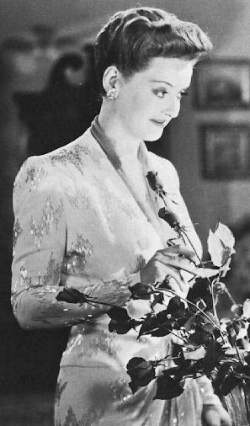
In a simple, but stunning white creation by Chris March she instantly recalls "Now, Voyager" (this and this) and it makes total sense that the legend would want to recall Hollywood's studio era.
Best of all though are her beautiful shoes (which she said she was dying to take off) and that gem encrusted clutch which embody timeless elegance.

4. Penélope Cruz
She might always play it safe (and sometimes even dull) to previous award shows but Pe always saves her best look for Oscar. Wrapped in burgundy Donna Karan she was two parts old school European glamor, one part quintessential American classic.

3. Jennifer Lopez
Some dresses seem to take on a life of their own once they're put on (J. Lo sure knows about this) and this Armani Privé was a perfect example.
She called it "iridescent pink" as she showed anyone who cared to see how the enormous tail moved (OK I know that sounds bad but you know I'm speaking of the dress...).
Not anyone can pull off the kind of dress that doesn't even fit in a seat and J. Lo did it with class and incredibly sensual grace.

2. Sarah Jessica Parker
If last year she was a 1950's princess, Sarah Jessica Parker is all about the wild 60's in this stunning pale canary yellow column dress with jeweled appliques.
Everything about this Chanel Couture dress is perfection. The subtle transition of the pastel to the stronger metallic tones is to die for and the jewelry goes so accordingly that you almost think it's part of the dress.
The whole look is as if SJP had been possessed by a younger version of Julie Christie (the whole thing is straight out of "Darling").
If the clothes goddess is doing a decade theme at the Oscars I'm already salivating at what she'll do for the 70's.

1. Diane Kruger
You don't have to be an expert to know instantly that Diane Kruger is wearing Chanel. If the petal inspired middle section of the dress doesn't tip you off, then the black flowers will or the creamy color that you could almost swear has a faint No. 5 or Coco Mademoiselle scent...
In a nutshell this delicate but imposing work of couture art does more to evoke the legendary house than that dull biopic with Audrey Tautou did and Kruger shows that runways and red carpets sometimes can be the same.
Monday, February 22, 2010
BAFTA Style.
Europeans, and Americans in Europe, tend to be bolder even if that often means dressing like that they don't give a damn.
The BAFTAs usually offer a monochromatic palette (find me a BAFTA winner that isn't Tilda Swinton in something other than black, white or blue and I'll be surprised).
Last night wasn't that different but among the understated were some outstanding looks.

Saoirse Ronan has become a woman and she was "head to toes" in Burberry.
The playfulness of the white fluffy mini served to cover the subversive punk-ness of her leather bracelets and dark nails. Talk about versatility she was dressed for cocktails and a rock concert.

Vera Farmiga had never looked as lovely as she did in an overflowing white Marchesa gown with asymmetrical cuts and black sash.
Watching her walk the red carpet had a heavenly feel to it.

Stella McCartney gave Kate Winslet the excitement she had been lacking in previous red carpets. Not only did she look amazingly thin but that leg and those see through sides were mouth watering.

The insulting Audrey Tautou was gorgeous in Lanvin. She gave the event an unexpected splash of color and proved she's not the pale faced girl she plays in "Coco Before Chanel".
The candy colored heels and lips were sweet indeed.

Before yesterday I'd never heard the name Vionett, yes bad bad fashionista I know.
But after watching Carey Mulligan wear what I'm almost ready to call the best dress of this awards season (unless Oscar gives us something spectacular she has this in the bag) by the very exclusive French house, all I want to do now is spend the day submerging into the rich history of Madeleine Vionett's house.
This dress reminds me slightly of what Meryl Streep wore to the SAGs, but unlike the legend who was literally drowned by the flowered pattern, Mulligan owns it by seeming to spring from the black and white flowers in waifish glory.
Notice how she pulls off asymmetrical cuts, flowered patterns, a bold new hairdo and a short/long leg at the same time!
She's a style miracle.
I think that Kristin Scott Thomas was a bit too Cruella de Vil in this Louis Vuitton creation that seemed to be made from a buffalo she'd killed with her bare hands.

However once she took away the top she was all kinds of lovely and so elegant even if it looked she was carrying a dead fox to the show.
Thursday, January 7, 2010
Up in the Air **

Director: Jason Reitman
Cast: George Clooney, Vera Farmiga, Anna Kendrick
Jason Bateman, Melanie Lynskey, J.K. Simmons, Sam Elliott
Jim Miller, Zach Galifianakis
Who else but Clooney, the eternal bachelor, could play a character whose asshole-ish qualities are compensated by undeniable, inescapable charm?
This life spent in airports and hotels has made him avert to any kind of emotional connections with other human beings including his own family.
That is until he meets Alex (Farmiga) a sexy frequent flyer with whom he begins a casual relationship only to have him doubt if his philosophy on bachelorhood is convenient.
He also meets Natalie Keener (Kendrick) an ambitious young woman hired by his company to revolutionize layoffs by going the cyber way. With Natalie Ryan becomes threatened of becoming obsolete, but she too has demons of her own to work with.
With a combination of comedy and drama, "Up in the Air" tries hard to be extremely likable, to the point in which every character becomes essentially a two dimensional representation of different kinds of people.
"I stereotype, it's faster" says Ryan to teach Natalie a lesson in efficiency. Curiously director Jason Reitman does the same to his movie.
While trying to evoke humanity and the day-to-day struggles of people living under a horrifying economy, he makes his characters as cold and detached as the computers Natalie wants to impose on Ryan.
The people in "Up in the Air" are completely mechanical in their behavior, even the people who are supposed to be "real" like Lynskey who plays Ryan's small town sister. The screenplay suggests her warmth and innocence by making her the kind of woman who makes a printout of herself and her fiancé (McBride) to have it photographed all over the country, "like the gnome in that French movie".
All because, you guessed it, she can't afford a real honeymoon and is happy with the photographs.
It's this kind of faux humanity that makes the movie so difficult to believe in. Besides this the movie also has some offensive gender politics; it pretends it's OK with women in charge of their careers but eventually patronizes them to make Ryan shine brighter.
Take Natalie for example, Kendrick plays her with enough vapid naivete to make us like her, but behind her tough facade lies a person so easy to convince that she would give up a life dream to be with a man.
When this comes and bites her in the ass, the movie proves Ryan was right about love sucking so much and people who fall for that trap being disposable.
Then there's Alex, who Farmiga imbues with sexiness and incredible confidence, but who is nothing more than your average maneater come the movie's end. Meaning that in this movie if you're a career woman you're either a bitter, disappointed lover or a soulless nymphomaniac.
Only women from Ryan's hometown have husbands who love them and the possibility of happiness.
"Up in the Air" is condescending towards lifestyle choices that don't fit its idea of living. The problem is that the movie is all appearances and doesn't even have an idea to back up its statements.
If problems only exist when their solution is available, then this movie shouldn't even be an issue.
Beyond its questioning of "loneliness" and relationships lies nothing more than a sleek corporate ad that tries to take you off the fact that they've been telling you all along that no matter what you do, you'll die alone.
Thursday, December 17, 2009
SAG Nominations.
Outstanding Performance by a Cast in a Motion Picture
An Education
The Hurt Locker
Inglourious Basterds
Nine
Precious
Outstanding Performance by a Female Actor in a Leading Role
Sandra Bullock, The Blind Side
Helen Mirren, The Last Station
Carey Mulligan, An Education
Gabby Sidibe, Precious
Meryl Streep, Julie & Julia
Outstanding Performance by a Male Actor in a Leading Role
Jeff Bridges, Crazy Heart
George Clooney, Up in the Air
Colin Firth, A Single Man
Morgan Freeman, Invictus
Jeremy Renner, The Hurt Locker
Outstanding Performance by a Male Actor in a Supporting Role
Matt Damon, Invictus
Woody Harrelson, The Messenger
Christopher Plummer, The Last Station
Stanley Tucci, The Lovely Bones
Christoph Waltz, Inglourious Basterds
Outstanding Performance by a Female Actor in a Supporting Role
Penelope Cruz, Nine
Vera Farmiga, Up in the Air
Anna Kendrick, Up in the Air
Diane Kruger, Inglourious Basterds
Mo’Nique, Precious
Monday, February 2, 2009
Nothing But the Truth ***1/2

Director: Rod Lurie
Cast: Kate Beckinsale, Vera Farmiga
Matt Dillon, Angela Bassett, David Schwimmer, Alan Alda, Noah Wyle
Thanks to the course the world has taken in the last couple of decades the idea of politics has turned into something that implies corruption, naïve idealism and/or loss of time.
It’s not by chance that political films have also turned into grandiose, self conscious attempts of unmasking deeper truths about the dark ways of the feared “system”.
Along the way we’ve forgotten that, most of the time, it’s us who put the governments where they are (despite which of the parties we voted for) and that essentially politics are about us.
Rod Lurie’s clever, incredibly entertaining “Nothing But the Truth” is a reminder of what political films should be all about.
It starts by taking an underdog of sorts and having them fight the “big guys”, but then turns its very premise upside down into the kind of straightforward tale one might imagine someone like Plato or Aristotle using to teach because of all its repercussions.
Kate Beckinsale plays Rachel Armstrong, a reporter for “The Capitol Post” who has uncovered a juicy story involving CIA agent Erica Van Doren (Farmiga) and her connection to a cover up mission which the President of the United States used to invade Venezuela.
If all this screams Iraq and 9/11 it should, because as we learn from the start the film is “based” on actual facts.
After publishing the story and exposing the identity of agent Van Doren, whose daughter goes to school with her son, Rachel is prosecuted in the name of the almighty “national security” and is jailed until she reveals her original source.
In jail, like a Capra heroine, Rachel remains true to her values and the film becomes a day-by-day account of her endurance and the way it becomes a thorn in the lives of her family and the people trying to get the truth out of her.
Lurie’s narrative approach is by all means traditional; Rachel ends up fighting for her bunk with a violent cellmate and her attorney (a fantastic Alda) ends up delivering an inspiring speech to the Supreme Court.
It strays from most genre films in a couple of distinctive ways; the first being its powerful ensemble.
Beckinsale has been imprisoned in movies before, but never had she been such a screen presence as with Rachel. As a reporter, her hair up in a slightly intimidating bun, she embodies dignity, fearlessness and courage. In prison with her hair down and no make up she preserves the dignity, but adds warmth, fear and hurtful pride to the character.
In one of the best scenes in the movie she is interviewed by a Barbara Walters like journalist who pretends to be interested in their professional bond, but goes straight for the sensationalism only to bring out Beckinsale’s best responses and reactions.
Farmiga, who has got to be one of the most underrated actresses working out there, brings a distinctive charm and appeal to Erica. You imagine Farmiga to be someone doing international espionage during office hours only to come to her daughter’s soccer game in the evenings.
She gets some of the best dialogue in the film as she can go from scared and sweet to utterly bitchy; when she refers to Rachel as “Lois Lane” you can’t help but giggle, but she makes the hairs in your neck raise when she calls her an “unpatriotic little c…” and means it.
Dillon is great as a federal prosecutor with no obvious villainous traits and Bassett, also greatly underused and underrated, brings gravitas playing Rachel’s editor.
The ensemble even as good as it is wouldn’t be anything without what’s arguably the film’s greatest asset: its screenplay.
Lurie’s dialogues are delicious and wildly satiric, that he can use references from “The Sopranos”, Paris Hilton and Ermenegildo Zegna suits without falling into the kind of dragging obvious cynicism found in recent independent “comedies” is nothing if not breathtaking.
With this film he finds the balance between cinema and reality as he can easily go from over the top speeches and one-liners that couldn’t breathe outside a movie, to intimate almost silent moments based on heartbreaking reality.
This also aids him in his creation of characters that are essentially human; you can’t justify, condemn or vilify any of the people in this film without a greater debate.
Is Rachel right by staying true to her principles while she is recurring to the sort of pride easily condemned by religious people? Is she wrong because she is putting her career before her family life? Is there any difference between career and self in this case?
Should Erica have exposed her case without the need of a leak? Is she as unpatriotic as Rachel? And for that matter is patriotism related to your obedience of the executive power, the Constitution or your ethical and human knowledge of right and wrong?
Lurie’s film offers questions like that while demonstrating how unstable the judicial and penal systems can be.
This doesn’t try to defend the press either, because Lurie knows how stories nowadays are only as good as they sell, so it would be useless to pretend his film is about defending a lost cause.
What Lurie’s film is about is our perception of the truth. He’s asking us, now that we can’ trust the government, the law, the press or the media who will help us decide what’s true?
This cleverly executed discourse is suggested from the film’s title which reminds us of the oath used for justice purposes, but also implies that what we’re watching is a truth of sorts.
Perhaps not the “truth” from the “real story” with different names and events (if so, can this truth come in fictitious packages?) but also of the truth which these people as movie characters have to deal with.
They exist in the cinematic universe and watching them we are often asked to make compromises with ourselves that we wouldn’t consider doing for real people.
The reality/fiction parallels Lurie draws out between our perception of what we see in the news and what we see in our everyday life are chilling.
After all we often label people as “terrorists” by their looks, nationality or some other superficial element, without taking a single moment to try and look what’s beyond the surface.
Lurie however is smart enough to acknowledge that he’s no better than us and uses the mystery of Rachel’s source to point this out.
For some this need to find out who the source is will be persistent throughout the running time, while for others it will be a McGuffin of sorts that just helped propel the rest of the plot.
“Nothing But the Truth” ends where it began, in an obvious and implicit way. Rachel first sat on a school bus where her son accused someone of being a “tattle”. Later Rachel sits in a prison bus where she remained because she avoided being a “tattle”.
The visual element of the bus can be seen as a facile metaphor for the “journey of life”; however, the psychological implications of comparing essential childhood lessons to the distorted version of good and evil we deal with as grownups are far from being easy to digest and perhaps the only truth Lurie could come up with in his movie is that for all we know even kids know better.